
Monday, 23. November 2026
“Ambassadors of Hope”: EMS Charts a Shared Future for Global Mission
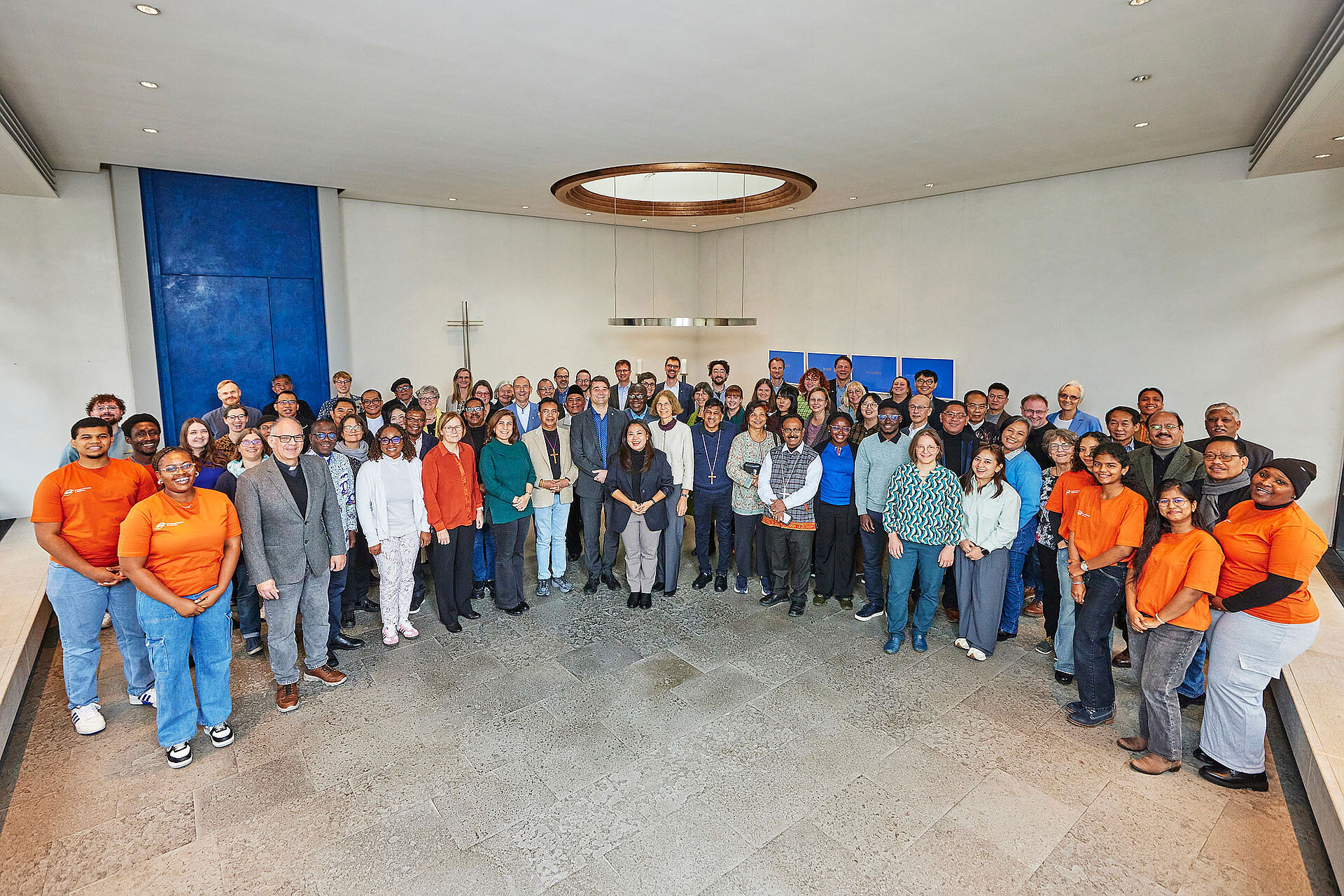
Delegates approve new strategic priorities, project funding, and measures to strengthen the fellowship’s long-term sustainability.
The General Assembly of the Evangelical Mission in Solidarity (EMS) has adopted a new strategic agenda for the years 2026–2031 under the theme “Ambassadors of Hope.” Meeting from 19 to 21 November in Bad Boll, Germany, delegates from across the EMS fellowship also approved funding for international projects, adopted the budgets for 2027 and 2028, and took key decisions to strengthen the organisation’s long-term sustainability.
Throughout its deliberations, the General Assembly reaffirmed its commitment to international partnership, mutual learning, and shared witness. By adopting the “Ambassadors of Hope” agenda, approving project funding and addressing long-term financial sustainability, delegates set a course that combines practical action with a renewed commitment to making hope visible in communities around the world.
“Ambassadors of Hope” Agenda 2026–2031
The newly adopted agenda is the result of an extensive consultation process involving EMS member churches, networks, and partners. It outlines a shared vision for the coming six years and calls on all EMS members to actively support its implementation.
“The decisions taken in Bad Boll combine vision with responsibility,” said Rev. Dr. Dieter Heidtmann, General Secretary of EMS. “Delegates have adopted an ambitious agenda for the coming six years while also taking important steps to secure the long-term sustainability of our fellowship. Our goal is to remain a strong international communion that can continue to bear witness to hope in a changing world.”
The agenda will serve as the common framework for the EMS communion over the next six years, encouraging churches and partner organisations to strengthen communities, care for creation and stand alongside people facing hardship.
The General Assembly also highlighted the need to strengthen both organisational and financial sustainability. A dedicated working group will develop proposals to help secure the future of the international communion.
Supporting Projects and Programmes
The General Assembly received the report of the Projects and Programmes (ProPro) Committee. In December 2025, applications were invited for the allocation of €1.37 million in project funding. Eighteen of the thirty EMS members participated in the process, submitting fifty-six project proposals across the four programme areas of evangelisation and theological training; diakonia, education and training; combating poverty; and commitment to justice, peace and the integrity of creation.
Following a thorough assessment based on the agreed funding criteria, the committee approved forty-one projects. These initiatives support churches and partner organisations in fields including education, community development, social justice, and sustainable livelihoods.
“The strong response to this funding round shows the vitality and creativity of our fellowship,” said Rev. Dr. Khaled Freij of the Episcopal Church in Jerusalem and the Middle East (EJMEC), Chair of the ProPro Committee. “The approved projects translate our shared commitment into concrete action. They strengthen communities, support vulnerable people, and enable churches to respond to local challenges in ways that make a real difference.”
Budget Adopted Amid Financial Challenges
Delegates also adopted the EMS budgets for 2027 and 2028 following extensive discussions on the organisation’s financial outlook. The budgets reflect declining income across the fellowship alongside rising personnel and operating costs.
Despite significant cost-saving measures, both budgets require withdrawals from reserves. The General Assembly stressed that this approach cannot be sustained indefinitely and called for continued efforts to strengthen income while aligning expenditure with the organisation’s financial realities.
The Assembly also approved the membership fee calculation for 2027 and 2028 and adopted a revised staffing scheme for the EMS Secretariat.
Membership Decisions
The General Assembly decided to admit the Central Sulawesi Christian Church (GKST) in Indonesia as a guest member of EMS with effect from 1 January 2029.
Delegates welcomed the church’s desire for closer cooperation within the EMS communion and acknowledged its contributions in areas including education, youth ministry, peacebuilding, and disaster preparedness.
At the same time, the Assembly adopted a moratorium on the admission of new members until further notice. Delegates emphasised that this decision aims at strengthening existing relationships and ensuring that the organisational and financial capacities of the EMS remain sustainable.
As the highest decision-making body of the Evangelical Mission in Solidarity (EMS), the General Assembly shapes the organisation’s shared vision, strategic direction and public witness across Africa, Asia, Europe, and the Middle East. The 2026 Assembly met from 19 to 21 November at the Protestant Academy Bad Boll, Germany.