
Friday, 20. November 2026
“Ambassadors of Hope”: Making Hope Visible in People’s Lives Around the World
The EMS General Assembly adopts its strategic framework, the “Agenda 2026–2031.”
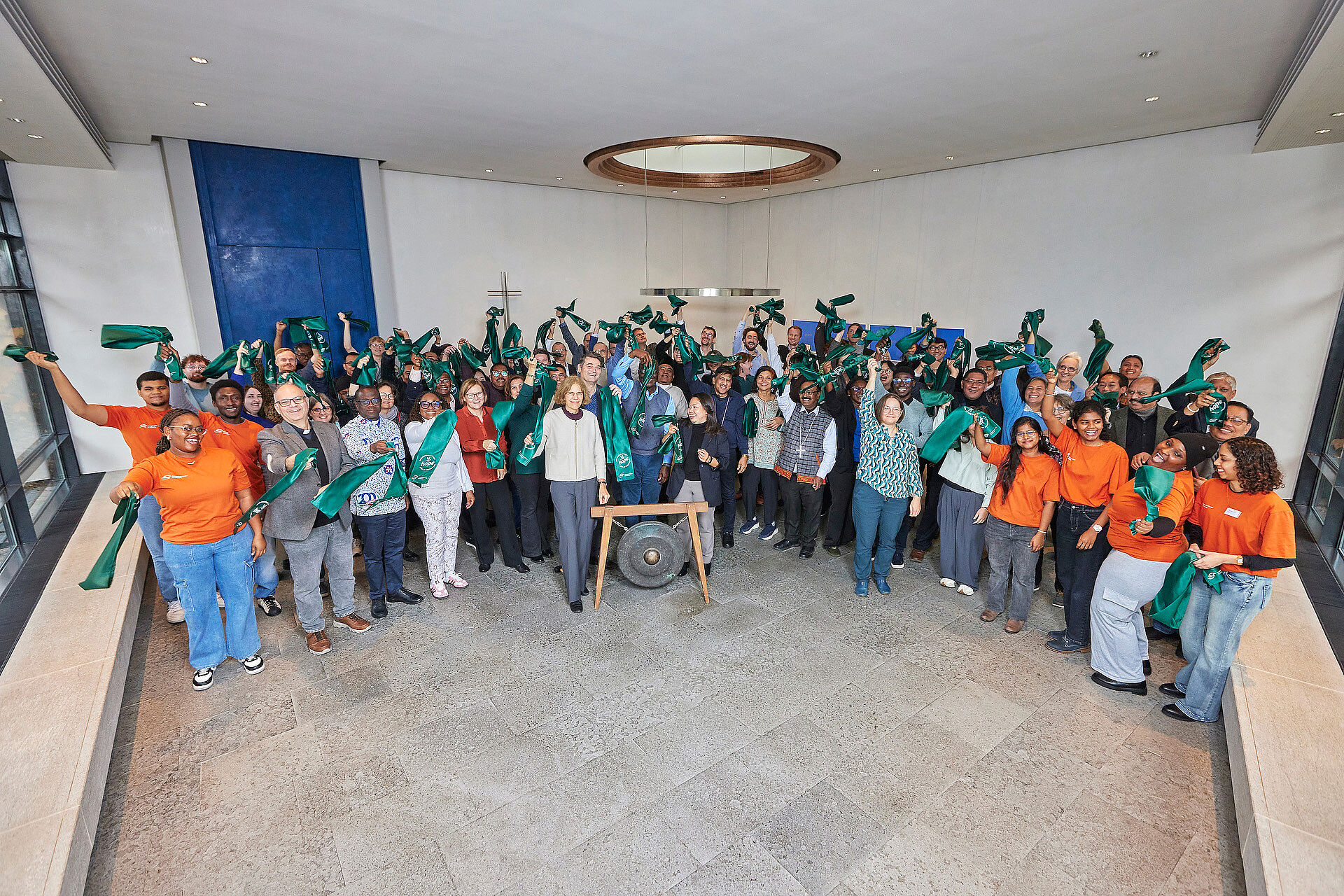
Under the theme “Ambassadors of Hope,” the General Assembly of the Evangelical Mission in Solidarity (EMS) has adopted its priorities and goals for the years 2026 to 2031. They are intended to shape the shared work of this international fellowship and provide guidance for its worldwide engagement in a time of multiple and interconnected challenges.
The Agenda 2026–2031 is the outcome of a broad participatory process. An internationally composed working group developed the draft based on contributions from EMS member churches, networks, and individuals. The agenda responds to pressing global challenges such as armed conflict, social injustice, climate change, and growing societal polarization. At the same time, it addresses the profound transformations affecting churches and mission organizations around the world.
At the heart of the new agenda is a shared vision: “Make hope visible in the lives of people around the world.”
“Throughout the consultation process, we heard a clear and consistent message from EMS members across continents: in a world marked by uncertainty, Christians are called to be visible signs of hope,” said Lizwi Mtumtum of the Moravian Church in South Africa (MCSA), who chaired the working group that developed the agenda. “The title Ambassadors of Hope captures both our calling and our commitment to walk together as one fellowship.”
Four strategic priorities
The EMS Agenda 2026–2031 names four strategic priorities for the coming years:
- Deepening cooperation on an equal footing;
- Increasing participation in EMS programmes and projects;
- Growing together in faith;
- Strengthening the EMS fellowship as Ambassadors of Hope.
The agenda also integrates ecological, social and financial sustainability as cross-cutting priorities. Particular emphasis is placed on climate justice, disaster risk reduction, combating poverty, exclusion and discrimination, promoting gender justice, and strengthening the long-term sustainability of the EMS fellowship.
“The agenda is not simply a strategic document,” said Mtumtum. “It is an invitation to action. Hope becomes visible when congregations, churches and individuals take concrete steps to strengthen communities, care for creation and stand alongside those facing hardship.”
A shared process across the fellowship
The agenda is the result of a year-long process launched following the election of the current EMS General Assembly in 2024. An international working group drafted the document and reviewed 28 submissions received from member churches, networks and individuals during the consultation phase.
The consultation revealed a strong commitment among EMS members to continue shaping the fellowship together and addressing common challenges through mutual learning, solidarity and shared responsibility.
“The richness of the feedback reminded us that EMS is a fellowship of churches that learn from one another, challenge one another and support one another,” said Mtumtum. “The agenda reflects that spirit of shared ownership and our commitment to a common future.”
Bringing hope to life
Alongside the agenda, EMS encourages member churches and regional networks to develop Ambassadors of Hope initiatives that make hope tangible in their own contexts. Congregations will be invited to create local activities that respond to the needs and challenges of their communities, with particular attention to the participation of young people and children.
The General Assembly expressed its gratitude to the working group and tasked the EMS Secretariat with further developing the Ambassadors of Hope campaign to support the implementation of the new agenda.
With its Agenda 2026–2031, EMS has adopted a common framework for witness, collaboration, and mission. At the same time, it reaffirms its commitment to making hope visible and fostering connections among people and churches around the world.
The General Assembly of the Evangelical Mission in Solidarity (EMS) is meeting from 19 to 21 November 2026 at the Protestant Academy Bad Boll in Germany. As the highest governing body of the international communion, it is responsible for setting the strategic direction of EMS and defining the priorities that will guide its common work in the years ahead.