Tuesday, 21. April 2026
Small Steps, Big Results
How Anna, who is deaf, is changing lives
info_outline

Tuesday, 21. April 2026
How Anna, who is deaf, is changing lives
Far from the headlines, there are stories of people who do not begin by asking, “What can go wrong?” but instead wonder, “What can grow?” Perhaps this is where hope truly begins: in careful attention to small details, in a focus on steps that may seem insignificant yet quietly open the door to an entirely new future.
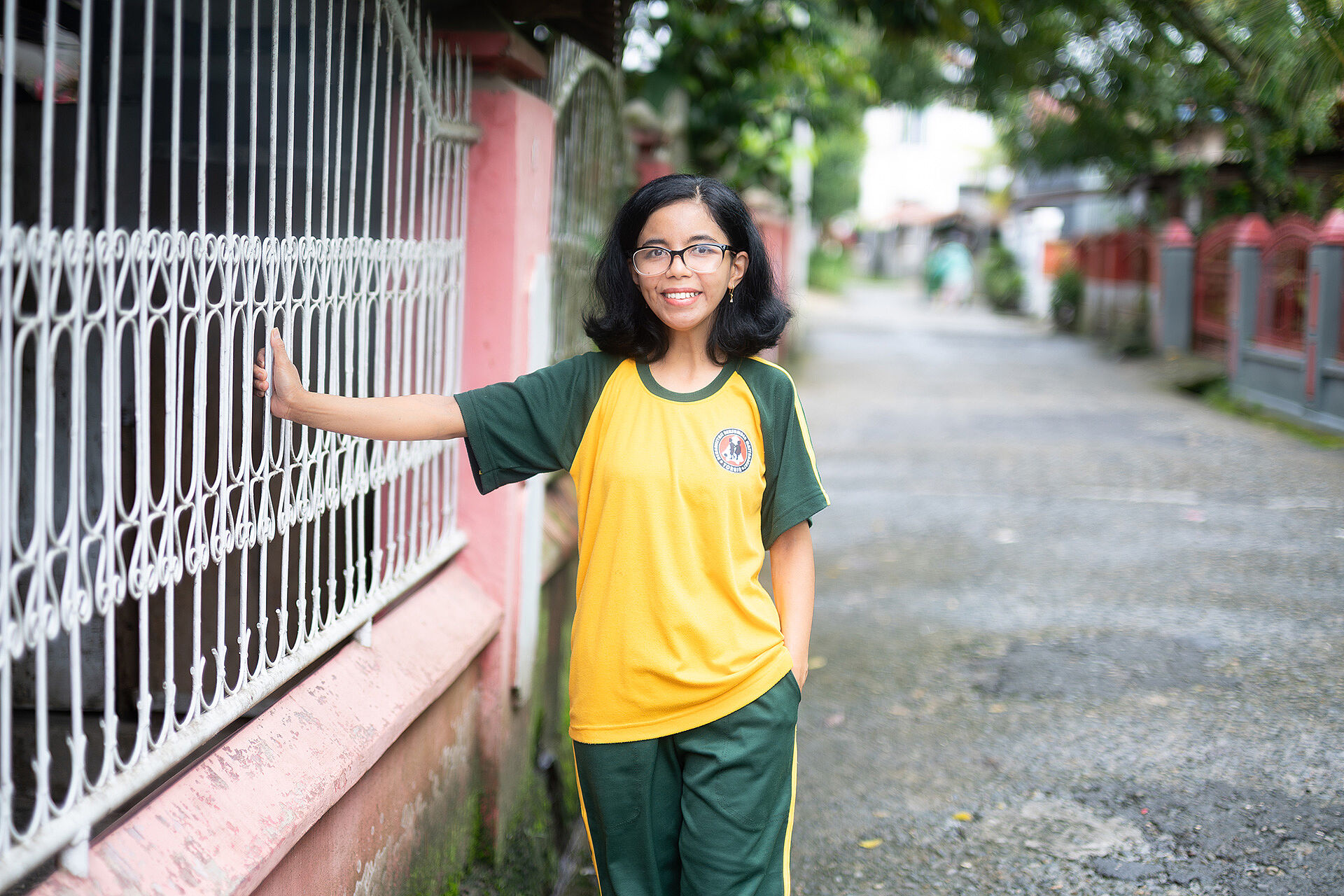
One such story of hope unfolds in the Toraja highlands of northern Indonesia. In the town of Rantepao, Anna Riana Arief, who is deaf, works at the special education centre of the Toraja Church. At her school, children with disabilities are not merely taught; they are encouraged, empowered, and lovingly accompanied as they take their first small – some-times hesitant – steps forward. The emphasis is on education and self-confidence, on skills and dignity. A child proudly signs his name with his own hands for the first time. A young girl discovers the joy of reading independently. A boy sud-denly realises, I can do something – people see me.
When forty-two-year-old Anna enters the classroom each morning, the children respond instantly. Hands fly up, faces light up, and the room fills with laughter, conversation,
and learning. Here, the focus is not on deficits, but on possibilities.
A safe place
Anna lost her hearing when she was about one year old. “It wasn’t until I got older that I realised I was different from the other children,” she says. Things that many people take for granted – a conversation, a shout, a casual remark – became a problem for her. “Sometimes I felt lonely. But I learnt to cope with it,” she says.
When forty-two-year-old, she joined the church’s training centre. “That was the first time I felt truly understood. I could learn to express myself without feeling ashamed. For me, it was a safe place.”
A safe place is more than a building. It is an experience. I am taken seriously. I am supported. I am not overlooked. For Anna, this place became a turning point – step by step.
When Support Creates A Ripple Effect
Today, Anna works at the centre herself. Her career path shows just what is possible through long-term, sustainable support. A child who needed support has grown into a woman who empowers others.
“I wanted to pass on what I had received myself,” she says. She started out as an assistant, later working as a carer and teacher. For her, it was a natural progression. She knew what the children were going through from her own experience. She knew where they felt insecure and where they needed support.
“It gives me a deep sense of joy to see the children grow in confidence,” she says. This progress happens in small, often quiet steps. “When they begin to use sign language in front of others – something they once didn’t dare to do – it makes me especially happy.”
Here, hope shows itself in the form of a gradual process. With patient support. As a trust that grows. “Without com-munication, there is no self-confidence,” Anna points out. “Sign language is the key to everything.” Language opens the door to participation. It means being able to express wishes, ask questions, stand up for oneself and dream. Anna often speaks of “my children” and explains, “I am by their side every single day. I see their fears, their progress, and their joy. Some-times it feels as though they were my own children.”
Participation Builds Self-Confidence
The children at the centre dream of living an independent life. They want to work, make their own products, or open a small shop. To pursue this path, the children need training, guidance, and reliable support – often for a period of several years.
“For many, the path to an independent life is not an easy one,” Anna says candidly. “There is often a lack of financial resources or support. But I remind the children of everything they can do – and of the strengths they already have.”
his may sound like just a simple line, but it is socially sig-nificant. That is because participation starts with self-con-fidence. And self-confidence grows whenever people believe in the potential that lies in each person to achieve more than circumstances would suggest.
The staff at the training centre do not just teach “their chil-dren” – they advise, support, and encourage them. They involve the parents, develop new perspectives, and discover abilities. This shows repeatedly just how important even small, practical things are – such as learning materials or joint activities. But often there is a lack of time and money to do this. “I would love to go on an outing with the children one day,” says Anna, smiling. “Just go out together, laugh and make memories.” Wishes like these go to show that hope is not something abstract. It is something real, part of everyday life and it brings people together.
Together We Can Change People’s Lives
What is happening in Rantepao is not an isolated case. It reflects a deep commitment on the part of society. Churches, local staff, international partners, and supporters – they all play a part in turning chance opportunities into sustainable paths in life. No-one can change the world on their own. But together, they are changing the lives of individual people.
Perhaps that is precisely the alternative narrative we need today – not one grand solution, but many small, reliable contributions. Many places where people stand up for one another. Many stories that show that hope is possible. “I have seen for myself just how support can change a person’s life,” says Anna. “Today, I am able to pass that on.” And she adds, “Without the people behind this work, my journey would not have been possible.”
Far away from headline news, that’s where quiet miracles take place. They are not flashy. They do not shout out for attention. But they transform lives – and, little by little, our world too.
Anyone who listens to Anna comes across these stories. Hope lies in the courage to let such stories move us. And to become part of these many small steps which, together, achieve more than first glance would suggest.
Thorsten Krüger