
Tuesday, 25. June 2024
Churches Worldwide for More Democracy
Churches worldwide are committed to strong democracy. The power of using social media should not be underestimated.
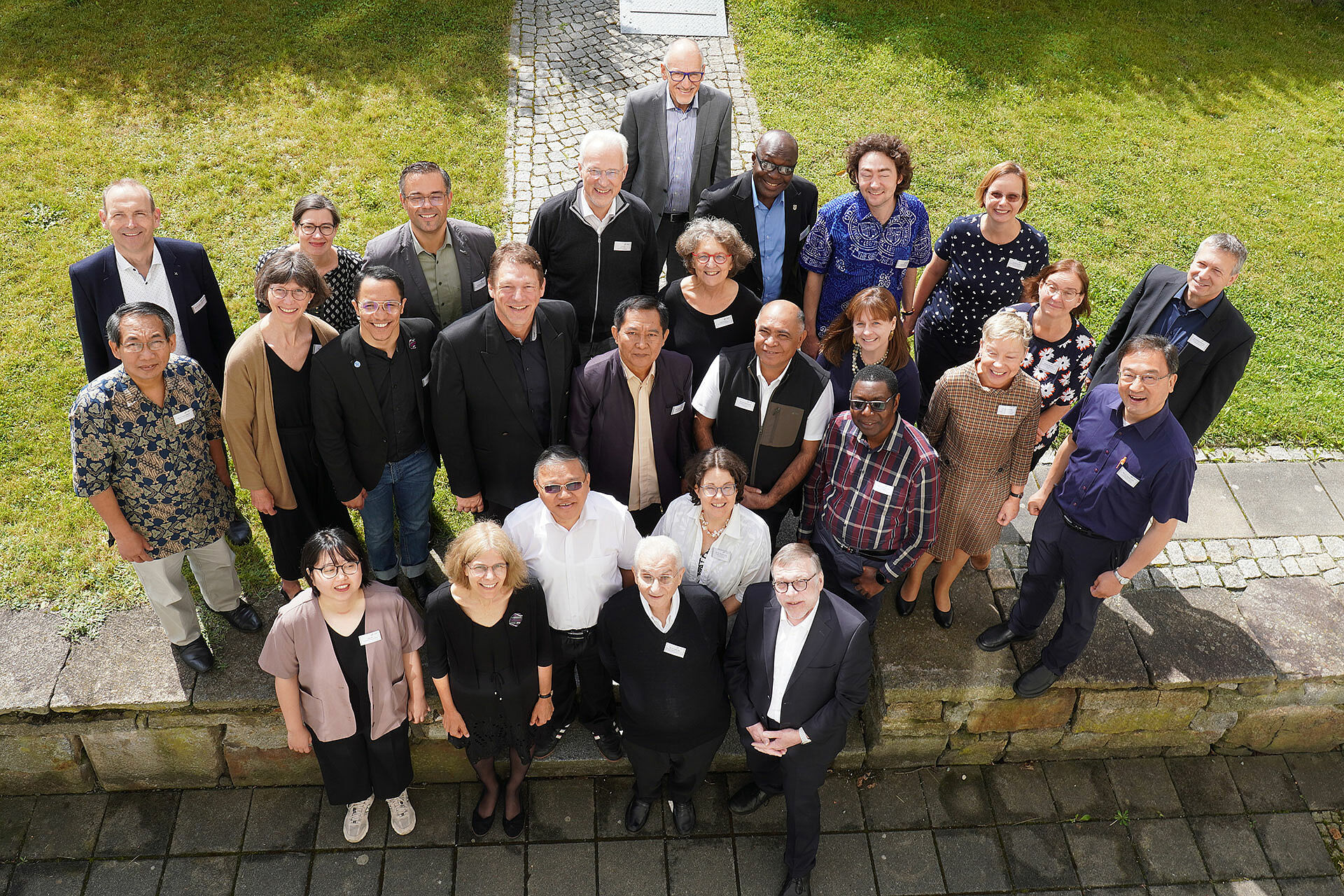
The International Mission Council of the Evangelical Mission in Solidarity (EMS) represents 30 churches and mission societies worldwide with over 25 million members. The churches are all committed to strong democracy. The Mission Council meeting was held in Herrnhut (Saxony), seat of the European Continental Province of the Moravian Church, between 19 and 23 June 2024. The delegates of the Mission Council came to Herrnhut from Germany, South Africa, Ghana, Indonesia, South Korea and Lebanon. They are all concerned about the current crisis facing democracy as strong divisions can be seen in many societies all over the world. The election results in Europe, South Korea and India confirm this concern as well as the pending elections in the USA. However, the delegates are also united in the conviction that churches must be co-creators of society, especially in challenging times - and that the hope sustaining the churches can also be a hope for democracy.
Churches are working to promote democracy
"In Ghana, the Presbyterian Church is organising nationwide workshops in preparation for the presidential elections in December to teach young people how to discuss political issues peacefully," reports Andrew Jackson Odjawo, pastor and Director for Ecumenical and Social Relations at the Presbyterian Church of Ghana (PCG).
The Protestant Church in Baden, Germany has just completed a whole "Year of Democracy". "In view of the European parliamentary elections, the Youth Synod of the Protestant Church in Baden will call for this work to be continued," says Kerstin Sommer, sharing her experience. She is the State Youth Secretary in Baden and in the EMS, she liaises with the Schneller Schools in Lebanon and Jordan. At the Schneller schools, children learn to participate in decision-making and to accept majority decisions. For example, the students were recently asked to participate in planning the renovation of the school's boarding home. What sounds like a trivial matter is the students' first experience of democratic codetermination.
But action alone is not the decisive factor. Listening, understanding and talking to one another are democratic skills. Reverend Dr Demianus Ice, who stressed this point, knows what he is talking about. He is the delegate of the Halmahera Church in Indonesia. With its 280 million inhabitants, Indonesia is so large and diverse that mutual understanding is absolutely essential.
Democracy, the Church and social media
Communication can promote democracy. However, as the European parliamentary elections have shown, it can also be used to influence the opposite. In Germany, a noticeably large number of young people voted for anti-democratic parties. This is partly due to the fact that these parties were strongly represented on social media.
The churches want to promote democracy worldwide and are involved in specific projects. Although they practise listening and understanding, they also need to be more active and professional in their use of social media. After all, the hope of the churches will only become hope for democracy if it is heard.
Dr h.c. Detlev Knoche, Chair of the International Mission Council of the EMS, says this about hope: "There seems to be a craving for easy answers. Be strong at the expense of others - my nation/my people first - resist the foreigners - close your borders! But as an international Christian Fellowship, we believe in equal rights for all people, in peace and justice. Together, this is what we stand for."
Press contact: Dr Dieter Heidtmann, heidtmann@ems-online.org, Tel. +49 711 636 21, Mobile +49 178 6367836