
Thursday, 29. October 2026
From Reflection to Action
Churches Commit to Ending Gender-Based Violence and Femicide
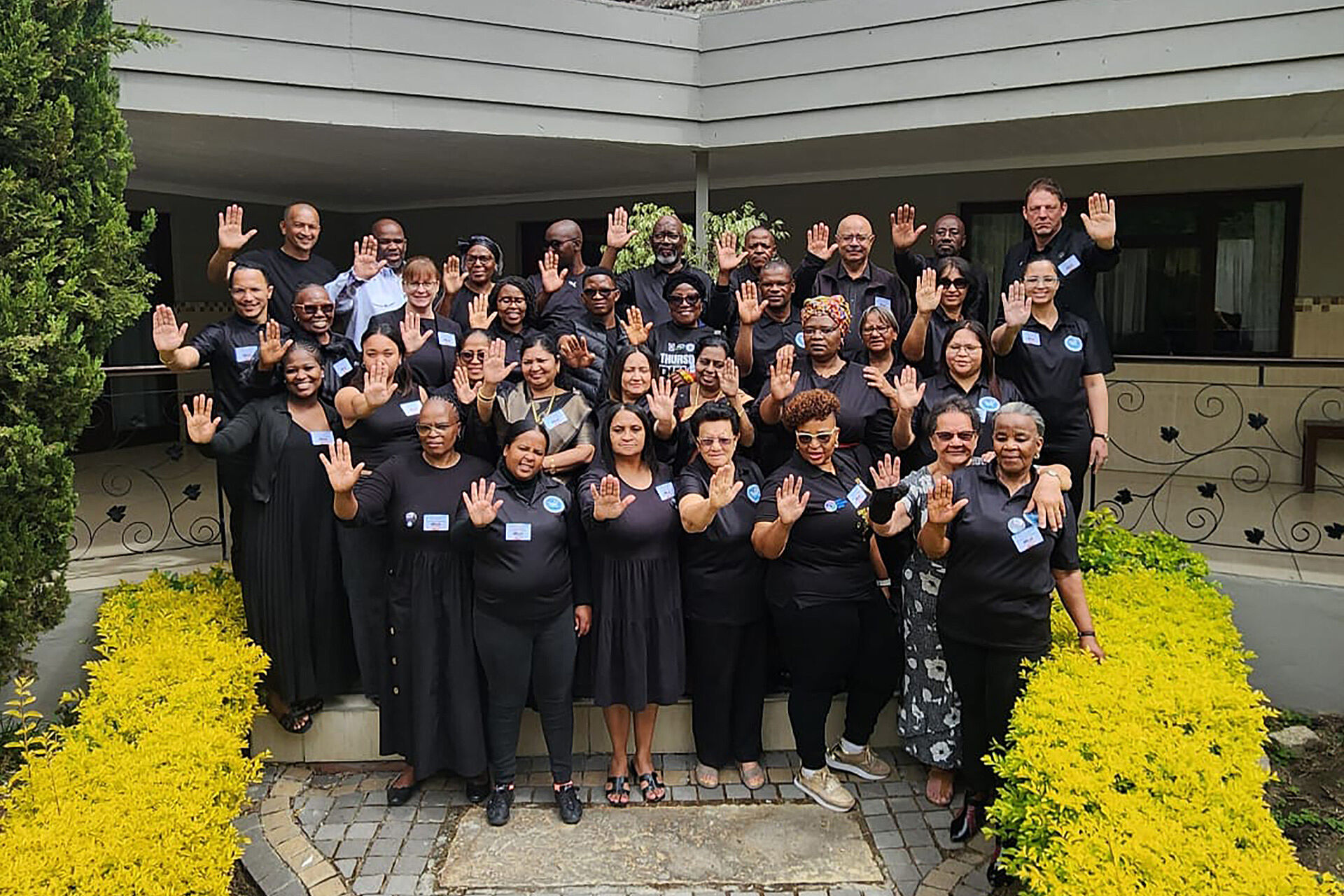
Church leaders, women's advocates, theologians and young people from across the international fellowship of the Evangelical Mission in Solidarity (EMS) gathered in Cape Town, South Africa, from 23 to 25 October for a conference aimed at strengthening the church's response to gender-based violence and femicide (GBVF).
Hosted by the Moravian Church in South Africa (MCSA) under the theme "From Reflection to Action: Strengthening MCSA's Response to Gender-Based Violence and Femicide," the three-day gathering was joined by representatives of the EMS International Women's Network, the Lutheran Communion in Southern Africa (LUCSA) and the South African Council of Churches (SACC).
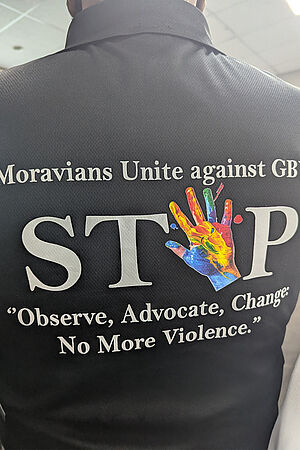
The conference opened with participants signing a pledge and lighting a commitment candle, symbolizing a shared determination to confront GBVF within churches and society. Throughout the event, speakers emphasized that the challenge now is to transform commitments into sustained action.
Theological Reflection Must Lead to Justice
A recurring theme throughout the conference was the conviction that addressing GBVF is not only a social imperative but a theological one.
In his keynote address, Rev. Georg Meyer, Head of Department Regions and Mission Associations at EMS, stressed that the fight against violence must be seen as central to the church's understanding of God's will for humanity.
"Violence against another human being is not simply a social problem. It is an assault on human dignity, because it strips individuals of their divine identity."
Drawing on the biblical teaching that all people are created in the image of God, Meyer argued that gender-based violence violates the God-given dignity of every human being. He referred to the words of Nobel Peace Prize laureate and theologian Desmond Tutu, who described systems that cause people to doubt their worth and dignity as "ultimate blasphemy."
"As long as GBVF continues in South Africa and around the world, we continue that blasphemy," Meyer said.
Challenging Harmful Traditions
Conference discussions also explored the role of culture and tradition in perpetuating violence.
Rev. Eleanor McCormick, Head of Department Programmes and Networks at EMS, encouraged churches to examine inherited practices critically.
"When culture is more sacred than life, we have a problem. But the MCSA is choosing life for all of God's people in its willingness to look at culture in and outside the church. The MCSA is courageously moving towards hard questions, asking what traditions need to change."
The importance of including younger generations in this process was highlighted by former EMS Ecumenical Volunteer Programme participants Zingce Dyonase and Faith Daniels, who called for greater youth participation in decision-making. Their appeal resulted in a commitment to include youth representatives in the MCSA Anti-GBVF Steering Committee.
Reflection and Action Go Hand in Hand
Participants repeatedly rejected the notion that reflection and action are separate or competing responses to GBVF. Instead, they emphasized that meaningful change requires an ongoing cycle of theological reflection, practical action and renewed learning.
"Our actions against GBVF have begun in prayerful reflection, will meet in action and then must return to reflection again and again as we learn and change," said MCSA Bishop Jerome Slamat.
Addressing the conference, SACC General Secretary Rev. Mzwandile Wilson Molo affirmed the inherent dignity of every human being, declaring that a person's physical characteristics should never determine their humanity. His words resonated strongly throughout subsequent discussions.
Building a Movement of Solidarity
Several speakers drew parallels between the struggle against GBVF and South Africa's anti-apartheid movement. They pointed to the crucial role churches and international solidarity networks played in advocating for justice during apartheid and suggested that a similarly united movement is required today.
"As churches, we are among the most organized bodies in society. Imagine what we could achieve if we decided to do it together," one panellist remarked.
The words of South African poet June Jordan, "We are the ones we have been waiting for," became a recurring refrain, inspiring participants to embrace responsibility for creating change.
Beyond Discussion to Transformation
In his closing remarks, MCSA President Lizwi Mtumtum thanked participants and reminded them that the conference scripture from Isaiah 1:17, "Learn to do right; seek justice. Defend the oppressed," must continue to guide the church's witness long after the gathering ends.
"The test of our gathering will not be the quality of our discussions, the number of presentations we delivered, or even the resolutions we adopted. The true measure of our success will be whether our actions make a meaningful difference in people's lives."
As the conference concluded, EMS Regional Support Officer Boneta Neethling challenged participants with questions that emerged from the discussions:
- Will we build structures of accountability?
- Will we dismantle the silence that protects perpetrators?
- Will we put resources behind our resolutions?
- Will we be a different kind of church because of what we know?
In the conference's final sermon, delivered at the historic Moravian Hill Chapel in Cape Town’s District Six, Rev. Ntsikelelo Tyokolwana called on churches to become agents of transformation and safety.
"As ambassadors of hope, you need to literally go back and rebuild houses that are safe. We must cultivate in the minds of perpetrators a new truth, a great unlearning, and find peace where there is conflict. We cannot build a flourishing church when children live in terror, when it is safer for women to be outside the home than inside it."
The conference concluded with a clear message: ending gender-based violence and femicide requires prayer, reflection and collective action. Participants departed committed to turning words into concrete change in their churches, communities and societies.