
Monday, 20. November 2023
“Jesus Himself Was a Refugee”
The International Mission Council discusses Hospitality and Migration
The EMS International Mission Council met via video conference from 15 to 17 November. Discussions focused on the topic of "Hospitality and Migration". The 30 member churches and mission societies of the Evangelical Mission in Solidarity (EMS) are committed to supporting refugees and migrants around the world. They work to promote humanity and respect for people who have had to leave their homes.
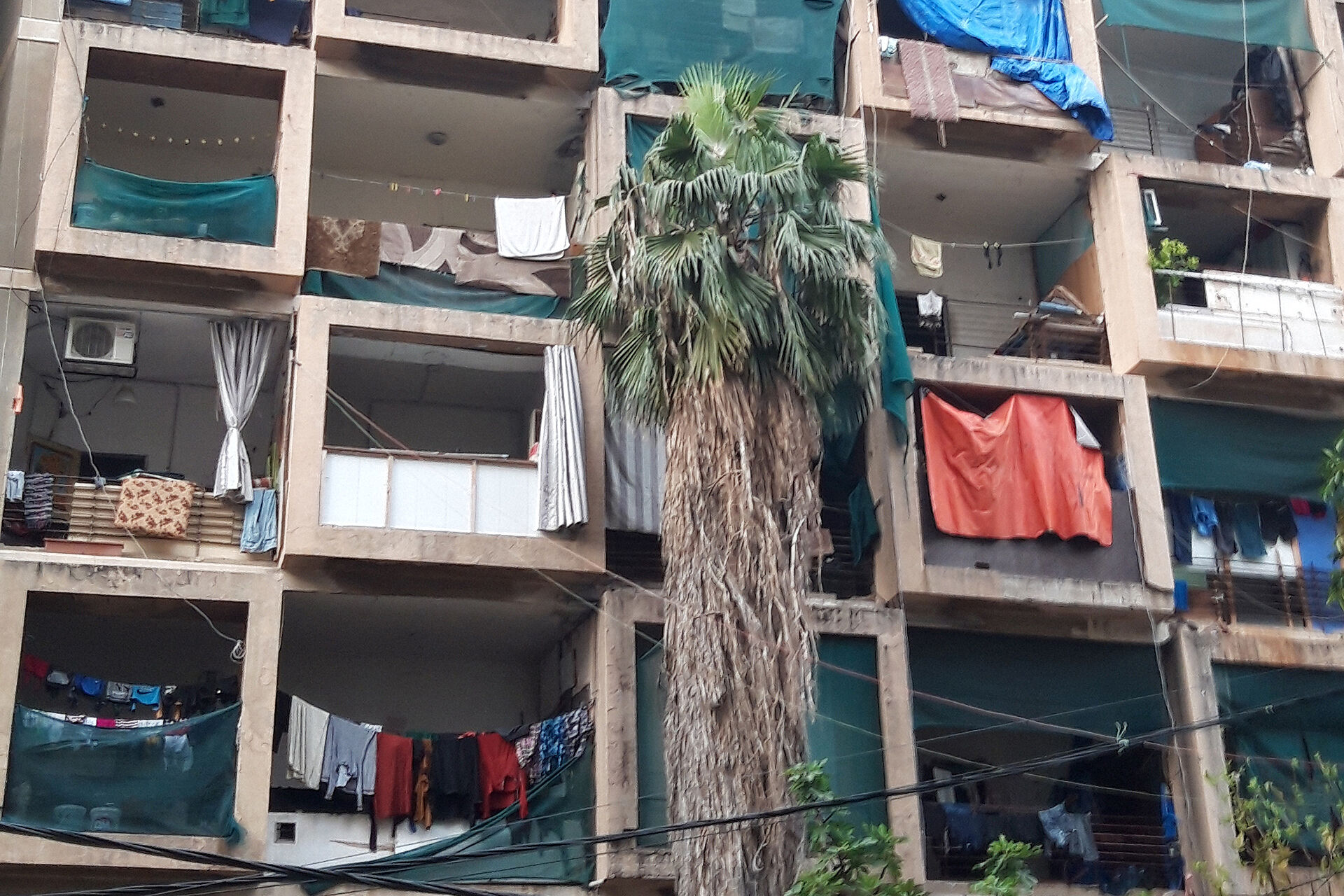
Rev. Dr. Habib Badr, senior pastor of the National Evangelical Church in Beirut (NECB), reported to the Mission Council meeting that Lebanon has welcomed more than 2 million refugees since the start of the civil war in Syria in 2011. This is almost half of the Lebanese population (about 5 million). He says that despite the major crises Lebanon has faced in recent years, the small country has managed to host such a large number of refugees. Badr informs that new groups of refugees (mostly male adults) have been arriving in large numbers from Syria for some months now. This new movement of refugees has triggered a debate in the Lebanese society and in the churches about the true motivation of this unusual displacement of men and how many more people Lebanon can take in. Many Lebanese are concerned that the sensitive balance between the different population groups will be upset. “We have asked ourselves what more we can do in terms of hospitality. I am firmly convinced that hospitality is an essential element of our Christian existence. But does hospitality still apply when it jeopardises our own existence in the country?”
Rev. Claudia Barth, pastor of the Church of Hope congregation in Kassel (Evangelical Church in Kurhesse and Waldeck, EKKW), talks about the experiences of her very international congregation. The Church of Hope offers a wide range of diaconical support. With the refugees in Germany since 2015 the church work changed. “Among other support regular food distribution was our form of hospitality to the wider community. But we also wanted to welcome the migrants, who came to Germany since 2015, and open our doors for them.” Because of the war in Ukraine many more people have come in the last ten months. Barth reports that the parish had to reorganize its food offerings due to the high number of refugees in order to continue to provide access to parishioners. This was not easy. She explains: “For us, participation is the key to solving this challenge. Refugees who came to us a few years ago are now helping to support those who have just arrived. We recognize each other as host and guest at the same time. Our community has become a home for many different people.”
The General Secretary of the Church of South India (CSI), Adv. Fernandas Rathina Raja, brought the perspective of migrants to the discussion. In South India, more than a third of the population are migrants. Most of them have come to the cities as day labourers or construction workers, but India has also taken in nearly 8 million refugees from Bangladesh. "Migrant workers are the backbone of India’s economy. They generate more than 10 per cent of India's gross domestic product, despite being paid minimal wages and mostly living in squalid conditions." Fernandas criticises the fact that migrant families in particular have no rights or protection: "The children receive no support whatsoever. In some cases, it is very difficult for them to go to school locally. The human rights of migrants are constantly violated. They are denied the right to a fair income and the right to education.” Fernandas calls for respect for refugees and migrants. “We must honour those who flee to save their lives. We need to get the Christian congregations and the secular communities to support them. We must put pressure on governments to guarantee the rights of migrants.”
EMS theological advisor, Dr Samuel Ayete Nyampong of the Presbyterian Church of Ghana (PCG), illustrated in his Bible study on Genesis 12 (Abraham and his family as migrants), what migration means to the people it affects: Migration involves leaving a familiar environment, leaving family, social and community relationships and becoming a sojourner, a foreigner, a stranger. Psychological effects include emotional crisis, depression, anxiety, fear, uncertainty, loneliness. “Many migrants are aware of the serious challenges and risks they face. But they are optimistic that they can succeed if given the opportunity in their new home. Some take out loans to finance their journey– they are aware of their heavy debts. Some are abused and victimised by their traffickers. But they keep their hopes high and don’t give up easily.”
The members of the International Mission Council come from Africa, Asia, Europe and the Middle East. They all experience the challenges of welcoming refugees and migrants. Despite all the differences in the situation in their respective countries, they ultimately agreed that the churches have a special responsibility towards refugees and migrants. Martin Abrahams, President of the Moravian Church in South Africa, summarised the churches' commitment as follows: “Jesus himself was a refugee. For that reason alone, the churches have an obligation to stand up for refugees and migrants.”