
Friday, 13. November 2026
Learning from the Past, Building the Future
Rebecca Teiko Sabah on mission, climate justice, and global church relationships
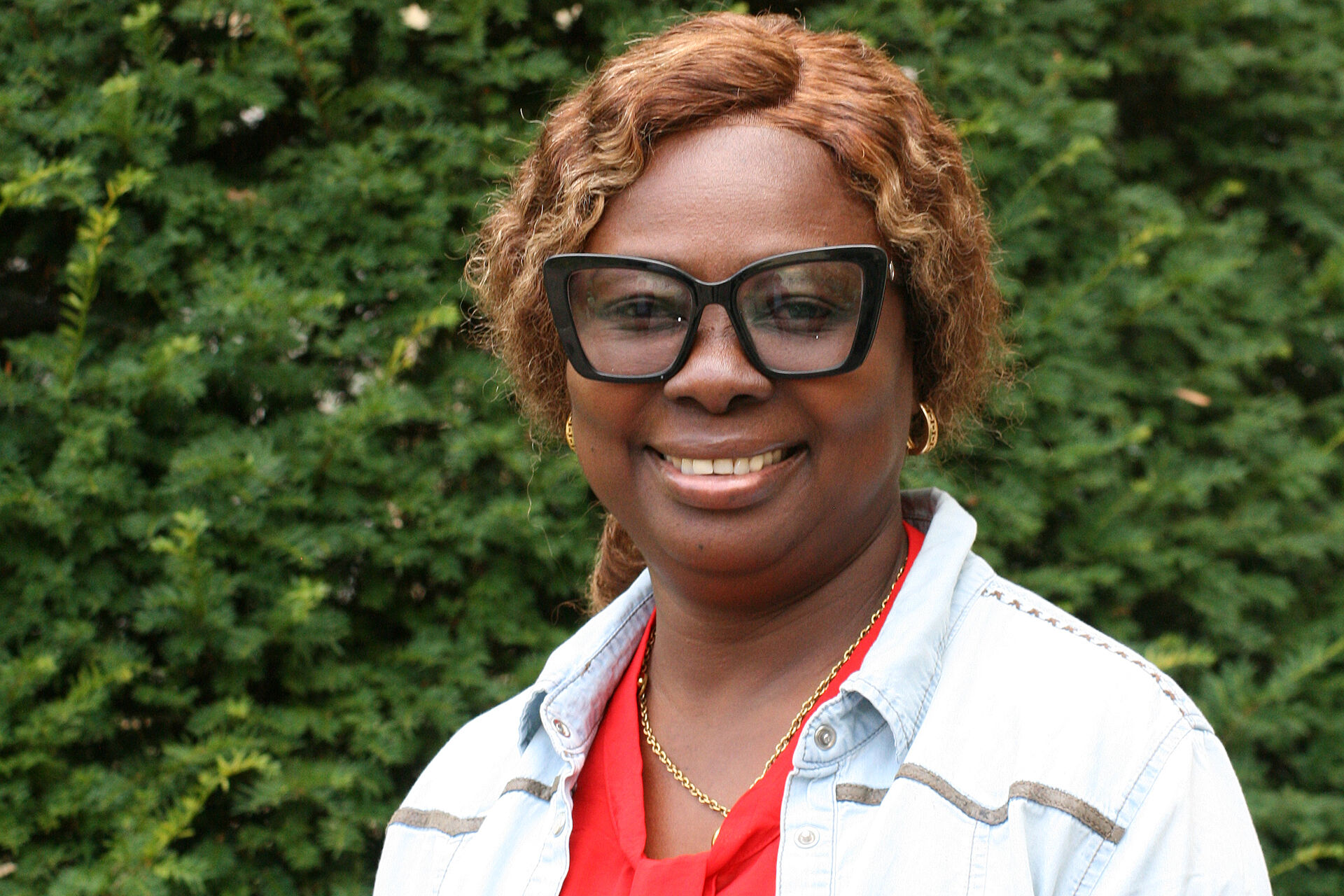
Nearly two centuries after the first missionaries of the Basel Mission arrived in Ghana, the Presbyterian Church of Ghana (PCG) is helping to shape a new understanding of Christian mission, one rooted in inclusion, social justice, environmental responsibility, and mutual partnership.
During a visit to the Secretariat of the Evangelical Mission in Solidarity (EMS) in Stuttgart as part of the church’s Bicentennial Ecumenical Pilgrimage, we spoke with Rebecca Teiko Sabah, Director for Development and Social Services, about how faith informs development work, why climate action has become part of the church’s witness, and what genuine partnership between churches looks like in the twenty-first century.
What did your visit to EMS and the historical Basel Mission sites mean to you?
For me personally, and for the church as well, it was very significant. As Presbyterians, we have always heard the names of the missionaries who came to Ghana and helped establish the church. Visiting the places where they were prepared and sent out allowed me to understand the other side of the story, including the families, planning, and sacrifices behind the mission movement. It was also inspiring to see how EMS has evolved from a mission-sending organization into an international church fellowship.
How do you understand Christian mission today?
The context has changed significantly since the nineteenth century, but the fundamental values remain the same. Today, mission is not only about evangelism. It is also about inclusion, human dignity, justice, and serving communities. We use professional expertise and technology to address social challenges while remaining rooted in Christian values. Development work has become a form of social evangelism that demonstrates God's love in practical ways.
How does Christian faith shape the development work of your department?
The PCG believes in holistic ministry. We speak of four witnesses of the church: spiritual witness, moral witness, social witness, and environmental witness. Together, these form a holistic understanding of Christian mission. Our social programmes in health, education, agriculture, and social services are not simply charitable projects. They are expressions of our faith and our commitment to serving people, especially the most vulnerable. We draw inspiration from Matthew 25, where Christ calls his followers to care for those who are hungry, sick and in need.
How does the church address issues of justice and human dignity?
We have programmes that combat child trafficking, support persons with disabilities and address gender-based violence. We encourage ministers and church leaders to identify cases of abuse and speak out against injustice. The church uses both education and advocacy to challenge harmful practices and promote the dignity of every person created by God.
What role should churches play in addressing climate change?
Climate change affects everyone. In Ghana, changing rainfall patterns, flooding and environmental degradation have serious consequences for communities. Churches must see environmental stewardship as part of their mission. We conduct projects promoting climate resilience; caring for creation is an essential part of our Christian witness.
Can you give examples of the PCG’s climate-related projects?
In northern Ghana, we support women by introducing energy-efficient cookstoves that reduce firewood consumption and help combat desertification. In cooperation with the Forestry Commission, we have planted about 700,000 trees and aim to reach one million. We also work on plastic recycling and upcycling, particularly with children and young people. In addition, the church has publicly campaigned against illegal mining because it damages water bodies and ecosystems.
How are the PCG and EMS cooperating on environmental issues?
We are exploring a Green Ambassadors initiative that will pilot environmental projects in selected communities. The idea is to co-create the programme together, combining experiences and ideas from both partners. We hope this initiative will generate innovative approaches that can later be shared more widely within the international church community.
How do you understand partnership between churches today?
I often describe our journey as moving from dependence to independence and finally to interdependence. We do not want relationships based solely on funding. Instead, we want partnerships based on shared ideas, mutual learning, and common mission. Both churches in the Global South and Global North have valuable experiences and resources to contribute. We learn from one another and work together as equals.
How does this approach influence your development work?
Our goal is empowerment. We support women, persons with disabilities and vulnerable communities so they can become economically independent. For example, we run village savings and loan schemes, entrepreneurship programmes, and livelihood projects. We want people to move from dependency to self-reliance and eventually become partners who can support others.
Why is youth work so important for the church?
Africa has a very young population, and young people are the future of both church and society. We have created different groups for teenagers, young adults, and older young adults to ensure everyone feels included. We also focus on entrepreneurship and job creation because unemployment is still a major challenge. We want young people to see the church as a place where they can develop their talents and contribute to society.
What message would you like to share with Christians in Ghana and Germany?
I think of the Sankofa bird, an important Ghanaian symbol. The bird looks backward while moving forward and carries an egg standing for future generations. The message is that we must learn from the past while building the future. As churches, we should honour our shared history, strengthen our partnership in the present and work together for the generations to come.