
Friday, 04. September 2026
Peace Convocation in Seoul to Renew Call for Reconciliation on Korean Peninsula
International church leaders to gather amid rising global tensions
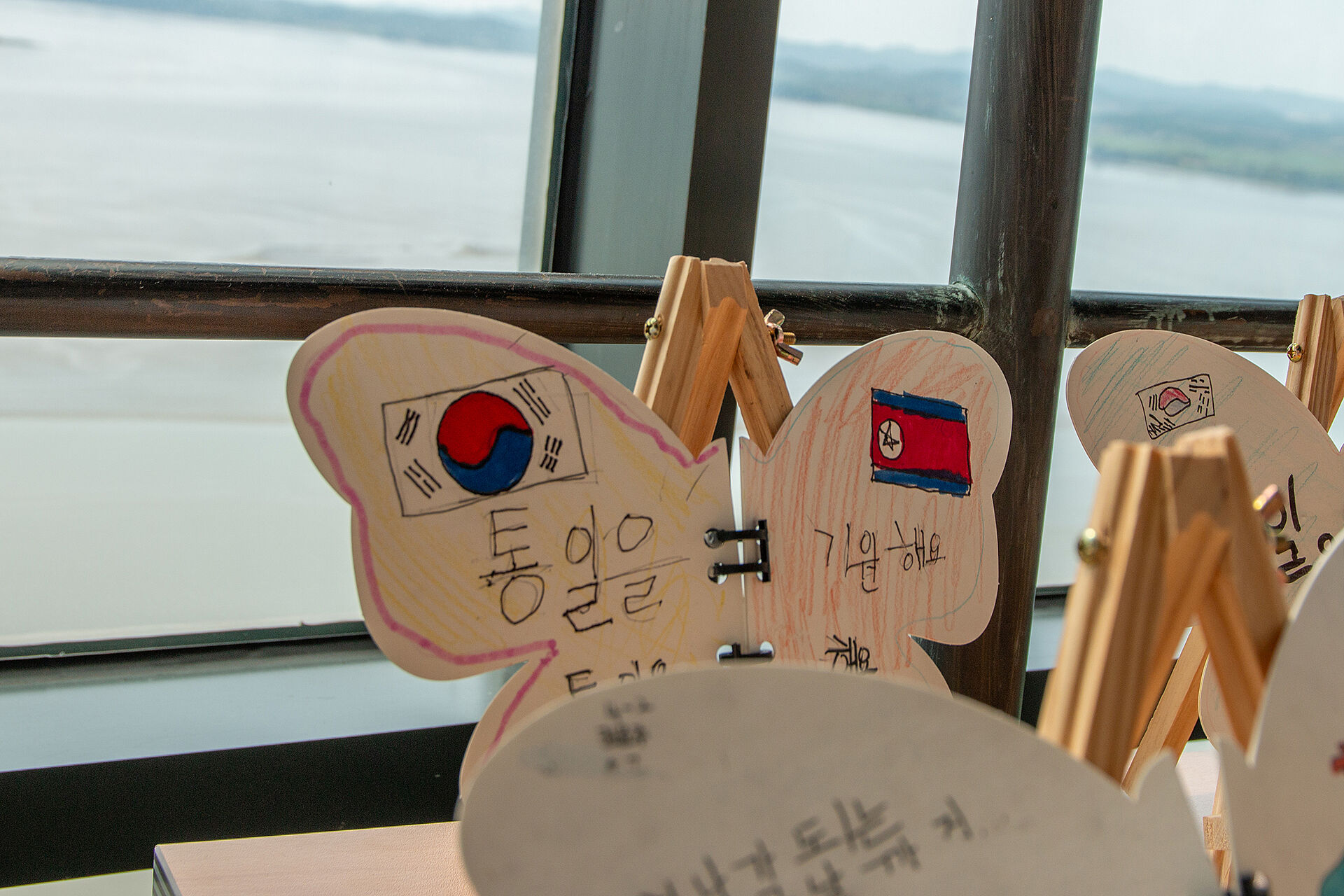
Christian leaders from around the world will gather in Seoul, South Korea, from 9 to 13 September 2026 for a major international peace convocation aimed at renewing efforts for peace on the Korean Peninsula and responding to growing global instability, armed conflict, and nuclear tensions.
The President of the Evangelical Mission in Solidarity (EMS), Rev. Anne Heitmann, and the Head of the East Asia Unit, Rev. Dr. Kang-Hee Han, will take part in the conference.
The 2026 International Ecumenical Peace Convocation is jointly organized by the World Council of Churches (WCC), the Christian Conference of Asia (CCA), and the National Council of Churches in Korea (NCCK). It will take place under the theme: “World Peace and the Korean Peninsula: The Church as a Community of Healing, Reconciliation, and Peacebuilding.”
A response to growing insecurity
“The gathering comes at a time of mounting international concern over armed conflicts, geopolitical rivalries, nuclear rearmament, and the rise of extremist ideologies,” says EMS President Anne Heitmann.
Rev. Dr. Kang-Hee Han points out that the Korean Peninsula technically remains at war more than seven decades after the 1953 Armistice Agreement brought an end to active hostilities in the Korean War. “Relations between North and South Korea have deteriorated in recent years,” he says. At the same time, regional tensions involving the United States, China, Japan, Russia, and North Korea continue to raise concerns about security in Northeast Asia. “Today, South Korean churches are striving for peaceful coexistence on the Korean Peninsula and beyond,” Han adds.
Peace rooted in justice
A central focus of the convocation will be the concept of Just Peace, an ecumenical theological framework that understands peace as more than the absence of war. It emphasizes justice, human dignity, reconciliation, nonviolent conflict resolution, and the healing of communities affected by violence and division. Rather than asking when war may be justified, Just Peace theology seeks to address the root causes of conflict and build the conditions for lasting peace.
Remembering a landmark moment for reconciliation
The convocation will also mark the 40th anniversary of the historic Glion Consultation of 1986, widely regarded as a milestone in the ecumenical movement for Korean reconciliation. Held during a period of authoritarian rule and political repression in South Korea, the meeting enabled Christians from North and South Korea to encounter one another and offered what organizers describe as “a powerful sign of unity and reconciliation that transcended political divisions and ideological barriers.”
Building on that legacy, the September gathering seeks to strengthen international Christian solidarity for peace, renew theological reflection on Just Peace, support a renewed peace process on the Korean Peninsula, and expand global efforts dedicated to healing and reconciliation.
International participation and action for peace
Approximately 500 participants are expected to attend, including church leaders, theologians, peace advocates, scholars, youth representatives, women’s groups, and members of civil society from around the world.
The programme will feature keynote addresses, worship services, panel discussions, and working groups focusing on nuclear disarmament, peacebuilding on the Korean Peninsula, and the global challenges posed by authoritarianism and extremism. Participants are expected to develop action plans and adopt a peace declaration.
The gathering will also include a peace pilgrimage to the Demilitarized Zone (DMZ), visits to Korean churches, and opportunities to engage with South Korea’s democratic history and development. Centred on the themes of nuclear abolition, demilitarization, reconciliation, and the establishment of a permanent peace regime to replace the Korean War Armistice, the convocation aims to strengthen global efforts toward a just and lasting peace in Korea, Asia, and beyond.
A renewed call for dialogue
“May this convocation serve as a renewed moral and spiritual call for dialogue over confrontation, reconciliation over division, and justice as the foundation for lasting peace,” EMS President Anne Heitmann concludes.
The EMS has two member churches in South Korea, the Presbyterian Church in the Republic of Korea (PROK) and the Presbyterian Church of Korea (PCK), which have been members of the EMS fellowship since 1974 and 1979, respectively. Together, they have been working for decades to promote peace and mutual understanding on the Korean Peninsula and beyond.