
Tuesday, 20. January 2026
Project Work in Indonesia
Working together for a better Society
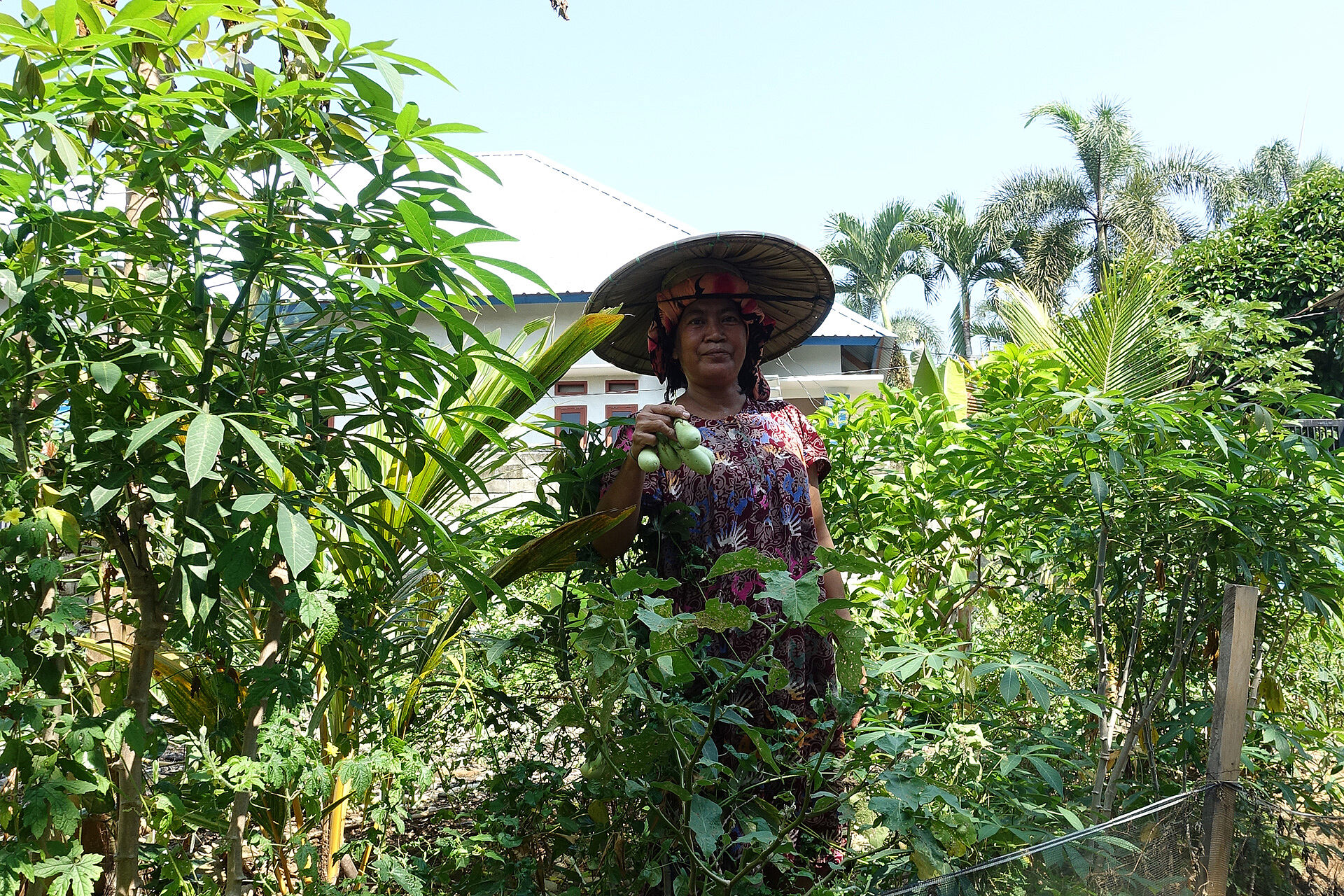
As a fellowship based on solidarity, the EMS brings churches and people together – not only worldwide, but also at regional level. A good example of this are the ten EMS member churches in Indonesia which learn from one another, share with each other and support each other in implementing their projects.
Indonesia is one of the four most densely populated countries in the world. The over 280 million citizens are mainly Muslim and live on thousands of scattered islands. Between them lie the vast expanses of the Indian Ocean. All of this poses a major challenge for the EMS member churches in Indonesia. If they want to work together, they usually have to overcome enormous physical distances. Their delegates therefore meet regularly at a central location for the EMS Regional Forum Indonesia. This forum provides a platform for the churches to support each other by offering advice and sharing successful concepts. They do not see themselves as a minority in a Muslim-dominated society, but as a special group that makes an essential contribution to the common good.
Extensive Training Programmes
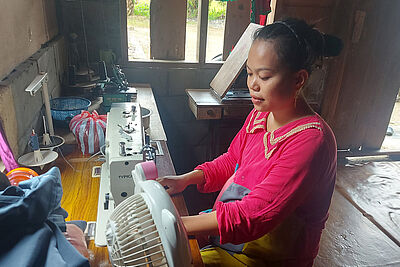
The Toraja Church (GT) runs an interdisciplinary training centre in the village of Kondoran on the island of Sulawesi. It supports local communities with training programmes in the fields of economics, environmental protection, nutrition, health, family counselling and conflict resolution. The centre's programmes train its students in efficient farming methods, in dealing with health risks and how to build peaceful relationships with others. People who have previously only been able to find low-status, poorly paid jobs can now learn new skills. Some of them, such as 31-year-old Suharyani, have even managed to become self-employed. She says "I’ve always wanted to become a seamstress and knew there was a demand for this in our village and our region. But I would never have been able to finance the training or the equipment on my own. The church project made it possible for me. The team on site continues to support and advise me if I have any questions. I am incredibly grateful, not only for myself, but also for my children. Thanks to my income, I’ll be able to give them a good start in life.”
Fish Farming and Rice Growing
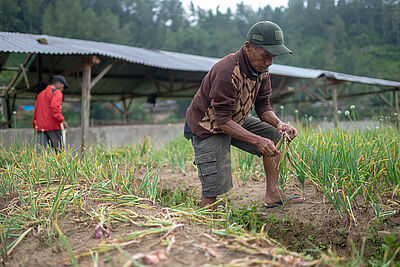
The Kondoran Centre shares its expertise with other churches. A project run by the Toraja Mamasa Church (GTM) in the highlands of Sulawesi is also benefiting from this. The church has set up its own training centre which specialises in teaching the Mina Padi method. This agricultural method involves keeping fish in flooded rice fields. It has a synergistic effect: The fish eat pests and fertilise the rice plants with their excrement, so increasing yields. The sale of edible fish provides rice farmers with a welcome additional income. There is another advantage: The fact that the Mina Padi method requires no artificial fertilisers means that natural water resources are conserved.
Algae Afainst Poverty
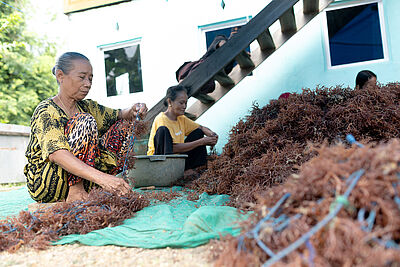
Water also plays a crucial role in the "Algae Against Poverty" project launched by the Christian Church of South Sulawesi (GKSS). After all, the sea is the basic requirement for the successful cultivation of these climate-friendly organisms that can be used in a variety of ways. The church is organising workshops at two locations in the coastal region of Labakkang in South Sulawesi and supports around 20 families to take over the cultivation and marketing of algae on their own responsibility. For this project, the church seeks advice from experts in research and business. The project is intentionally interfaith in nature and is aimed in equal measure at Christians and Muslims. It is expected that learning and working together will have a positive effect on interfaith coexistence in the predominantly Muslim population.
Focus on Sustainability
The Protestant Indonesian Church in Luwu (GPIL) has launched a project that both helps nature and supports the people who live off it. The project focuses on planting durian trees in deforested. areas. Durian trees, also known as the king of fruits, are widespread throughout Indonesia. They grow up to 50 metres high and can store large quantities of water. As a result, they make a significant contribution to maintaining an intact ecosystem and protecting the land against soil erosion. Their tasty fruits with their characteristic spiky skin are very popular and can be sold at a profit. This should enable the participating families to earn their own living.
The churches in Indonesia are working together to shape the future. You can play a part in this. No matter whether it's 20, 50 or 100 Euros – every donation counts and opens up real opportunities.
The churches in Indonesia are working together to shape the future. You can play a part in this. No matter whether it's 20, 50 or 100 Euros – every donation counts and opens up real opportunities.
Thank you so much for your support!
Fundraising Team