
Friday, 30. October 2026
Returning to the Roots, Building the Future
Interview with Rev. David Aboagye-Danquah, Clerk of the General Assembly of the Presbyterian Church of Ghana
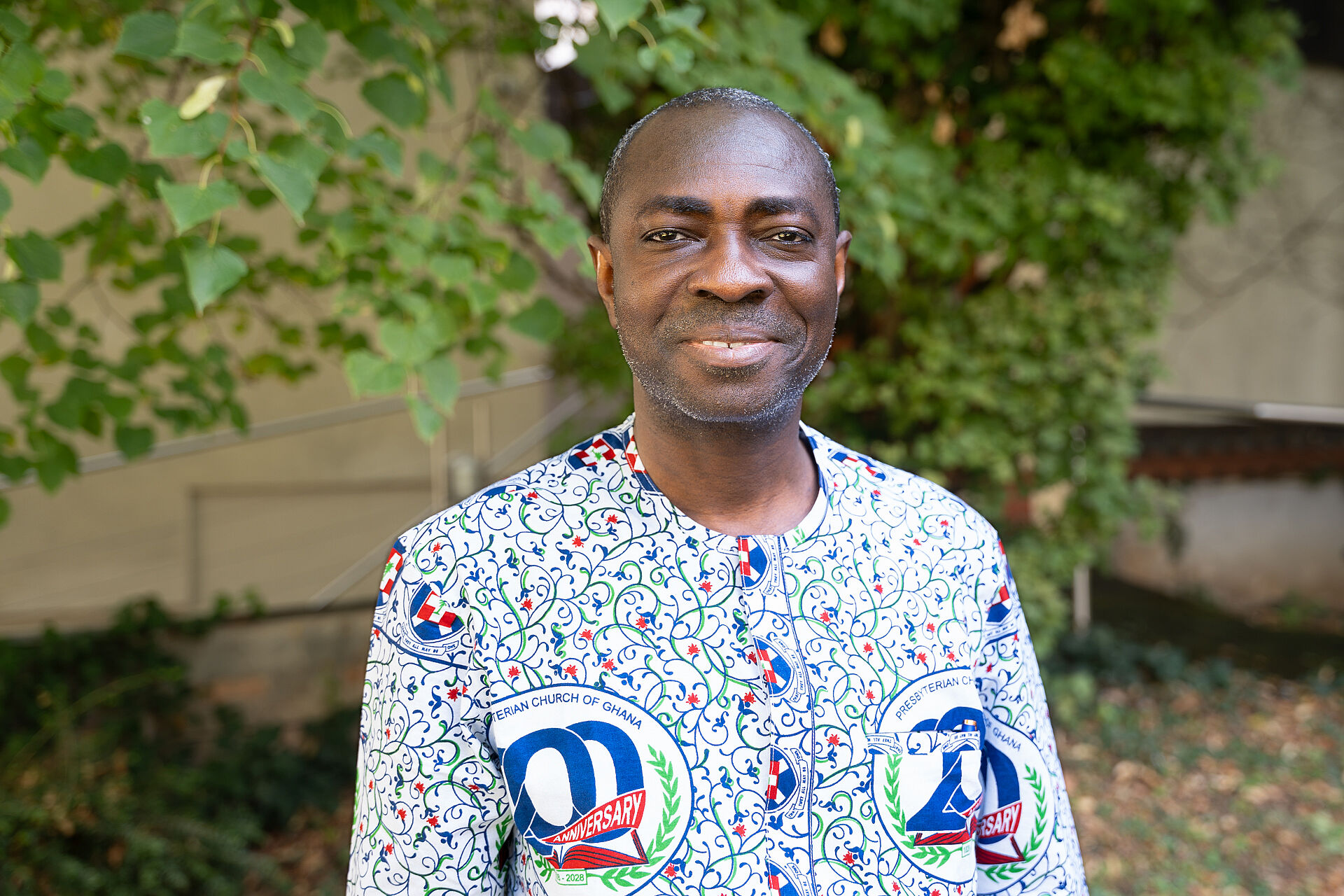
As the Presbyterian Church of Ghana (PCG) prepares to celebrate its 200th anniversary in 2028, a delegation of nearly 40 church leaders, ministers, congregants and staff undertook a Bicentennial Ecumenical Pilgrimage to Switzerland and Germany in September 2026. The journey retraced key stages in the church's history, reconnecting with the European churches and mission organizations that helped bring the Gospel to Ghana while fostering partnerships for the future.
During a visit to the EMS Secretariat in Stuttgart, we spoke with Rev. David Aboagye-Danquah, Clerk of the General Assembly of the PCG, about the significance of the pilgrimage, the changing nature of mission partnerships, and the role of churches in an increasingly interconnected world.
Why is this visit to Switzerland and Germany important for the Presbyterian Church of Ghana?
As part of our preparations for the 200th anniversary of the PCG in 2028, the General Assembly Council decided to reconnect with the historical roots of our church. We want to visit the churches, mission societies and institutions that first brought the gospel to Ghana, learn from their experiences, and share our own. Our delegation of almost 40 people is visiting places that played an important role in our history, including Basel, Germany, Mission 21 and EMS. At the same time, we are inviting our partners to join us in celebrating our bicentenary in October 2028.
What has impressed you most during this journey?
The dedication, resilience and commitment of the early missionaries have deeply moved me. They came to the Gold Coast knowing the risks. Many died shortly after arrival, yet they persevered. One particularly inspiring example is Andreas Riis, who convinced his mission board not to abandon the work despite years of setbacks. His faith and determination helped lay the foundation for what has become a church of nearly two million members today.
We also visited places connected to key figures such as Andreas Riis and Augustus Hanson. Seeing where they lived, worked and were ordained has made our history tangible and strengthened our appreciation for their sacrifices.
How do you see the relationship between the churches in Ghana and Europe today?
Our relationship has evolved. In the past, Ghana was mainly on the receiving end of missionary support. Today, the church in Ghana has grown significantly. We can train leaders, raise funds, support projects and even send missionaries ourselves. Therefore, our partnership should be based on mutual sharing rather than one-sided giving.
Like a grown child returning to contribute to the family, we want to ask how we can support our partner churches. We can share our faith, culture, experiences, resources and young people. At the same time, our European partners continue to accompany us. This mutual exchange strengthens us all.
What barriers must Christians cross in mission today?
Today, the greatest barriers are not geographical but cultural. We must overcome prejudices, fears and misconceptions about one another. Although our cultures differ, we are united in Christ. By building relationships, respecting one another and learning from each other's contexts, we can work together more effectively for the common good.
What can churches in Europe and Ghana learn from each other?
The churches in Africa are often characterised by vibrant worship, strong participation and visible enthusiasm. This vitality may be something that churches in Europe can learn from.
At the same time, churches in Africa need to reflect on their impact on society. We have large numbers of Christians, but we must ask whether our faith is influencing public life, leadership, integrity and ethical behaviour. Christian faith should shape how people live and work, not only how they worship. This is an area where we still have much to learn.
How has this journey shaped your vision for the PCG’s future?
Our church theme, "Celebrating Our Heritage, Building on the Foundation Already Laid", remains highly relevant. This visit has reinforced the importance of values such as integrity, hard work, respect, honesty and commitment. These values are part of our spiritual inheritance, and we must work harder to pass them on to future generations. Only then will the church have a greater impact on society.
What role can churches play in a world marked by conflict, migration and secularisation?
The church must remain rooted in Christ. History shows that God often works powerfully in difficult times. When challenges increase, Christians are called not to retreat but to deepen their faith, pray, live out Christian values and trust God. Difficult circumstances can become opportunities for renewal, revival and transformation.
God often works through people who remain faithful and courageous despite uncertainty. The early missionaries demonstrated that kind of faith, and their example continues to inspire us today.
What is your message of hope for the EMS fellowship?
We must never lose our sense of togetherness. Our strength lies in our unity in Christ. We have far more that unites us than divides us. By standing together, learning from one another and supporting one another, we can make a meaningful impact in our communities and beyond. United, we can achieve far more than we ever could alone.