
Thursday, 22. January 2026
Unity in a Fragmented World
Theological Reflection
“Just as a body, though one, has many parts, but all its many parts form one body, so it is with Christ.” 1 Corinthians 12:12
Why did Paul choose the body as a metaphor for unity? The body is not a perfect system; it lives in constant tension between thought, feeling, and action. Sometimes the head knows what is right, yet the hands refuse to follow. Paul speaks of one body with many members, yet not everyone possesses the same kind of body—physically or socially. Some have lost certain parts; some live with disabilities; others are “disconnected” due to pain or rejection. And yet, that is precisely where the beauty lies: the unity of Christ’s body is not built on perfection but on the willingness to stay connected through love.
However, in reality, the world and even the church often act like a body out of coordination: hands that oppress, mouths that curse, hearts that have grown numb. Can that still be called one body? In our fragmented world, filled with social, political, and ecological crises, this question becomes painfully real. What keeps us together when our directions and methods differ? Are we united by “commonality” or by a deeper “unity” that emerges from difference transformed in love?
True unity does not arise from domination but from humility, from making room for the other. Elisabeth Schüssler Fiorenza reminds us that the metaphor of the body must never silence difference or justify hierarchy; rather, it calls us to a discipleship of equals. Dorothee Sölle also expands this vision outward: when one member suffers, whether it be the poor, the silenced, or the wounded earth, the whole body suffers. The mystical body is political; solidarity is its heartbeat.
Being the body of Christ means living in relationships that must be continually restored. In 1 Corinthians 12, Paul reminds us that when one member suffers, all suffer; when one rejoices, all rejoice. In a world where social, political, and spiritual bonds are easily broken, the church is called to be a body that learns to feel again, a body that refuses to grow numb to the pain of its own members.
The unity of Christ’s body is not built on perfection but on the willingness to stay connected through love.
Yet at times, this world makes us feel as though Christ is being crucified again, in the faces of children caught in war zones, in the bodies weakened by injustice, and in the hearts of people who have lost the strength to forgive. When one part of the body is torn apart by violence or indifference, the whole body bears the scar. When hatred replaces love, and when the mind seeks only to protect itself or its own advantage, the space for Christ to reign within the body slowly fades.
Still, this body holds an empty place, for Christ who was born among us, and for those who still mourn and tremble, having seen His death repeated before their eyes because justice can no longer revive the human spirit. Yet may that empty place be filled once more with the living heart of Christ, beating gently within us, teaching us to love again, so that this broken body, and this fractured world, might once more feel the pulse of love that heals.
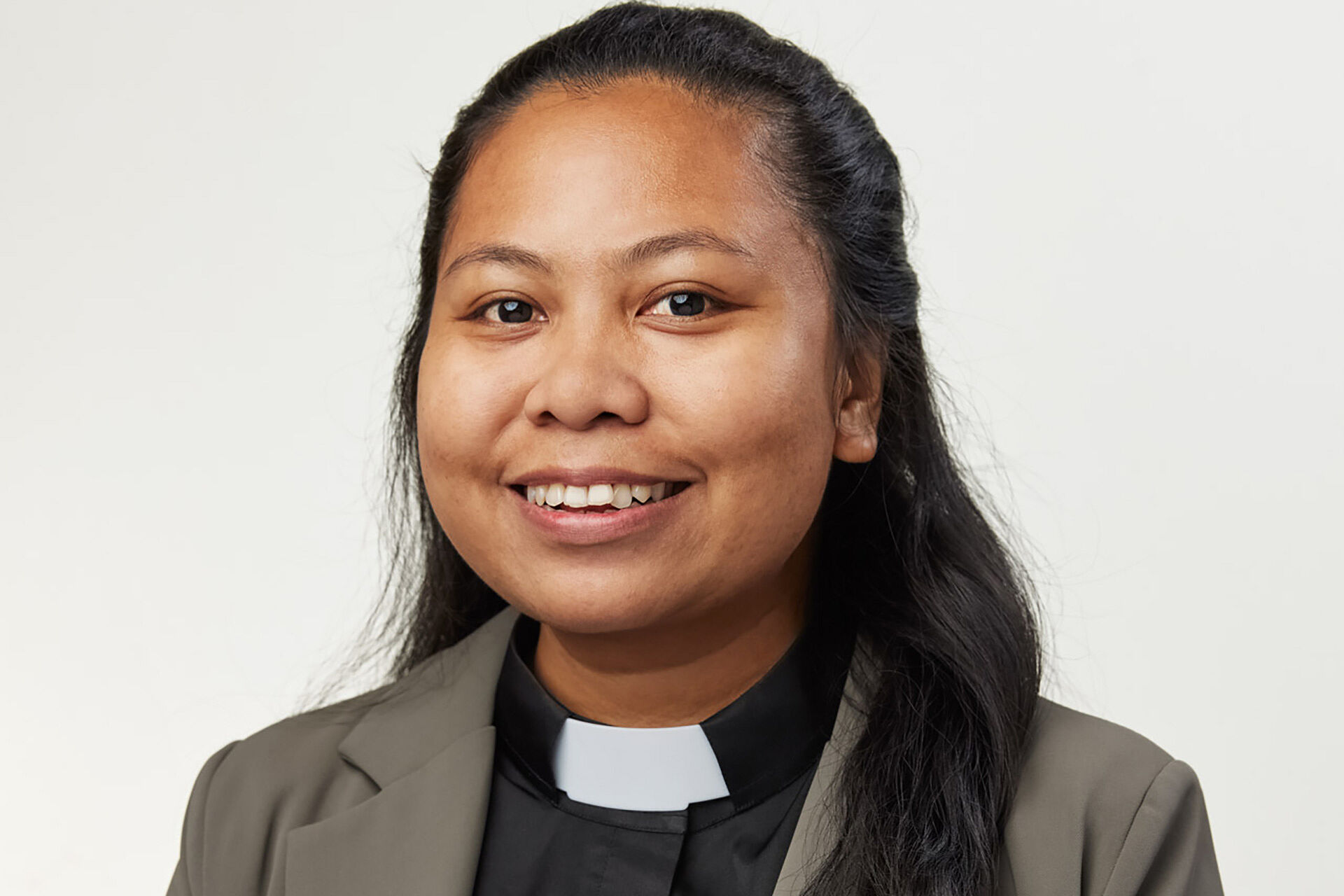
Rev. Junita (Toraja Church, Indonesia) is a member of the EMS Presidium.